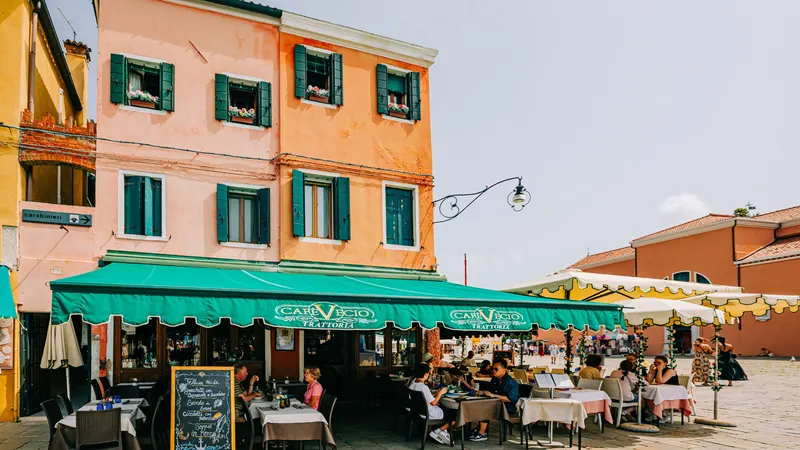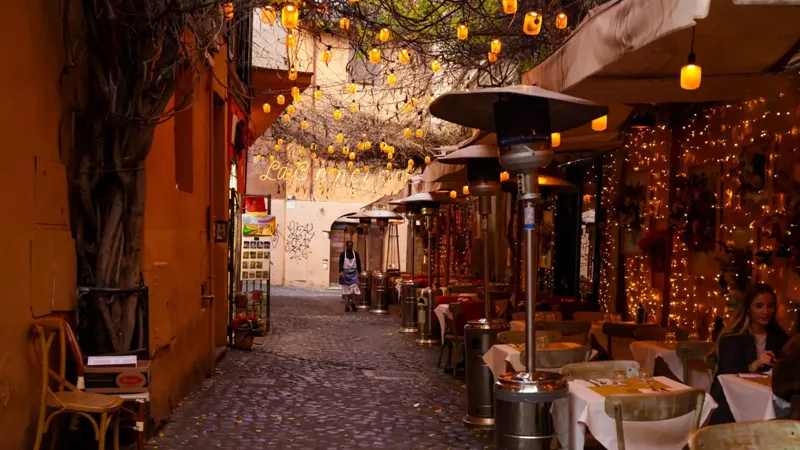
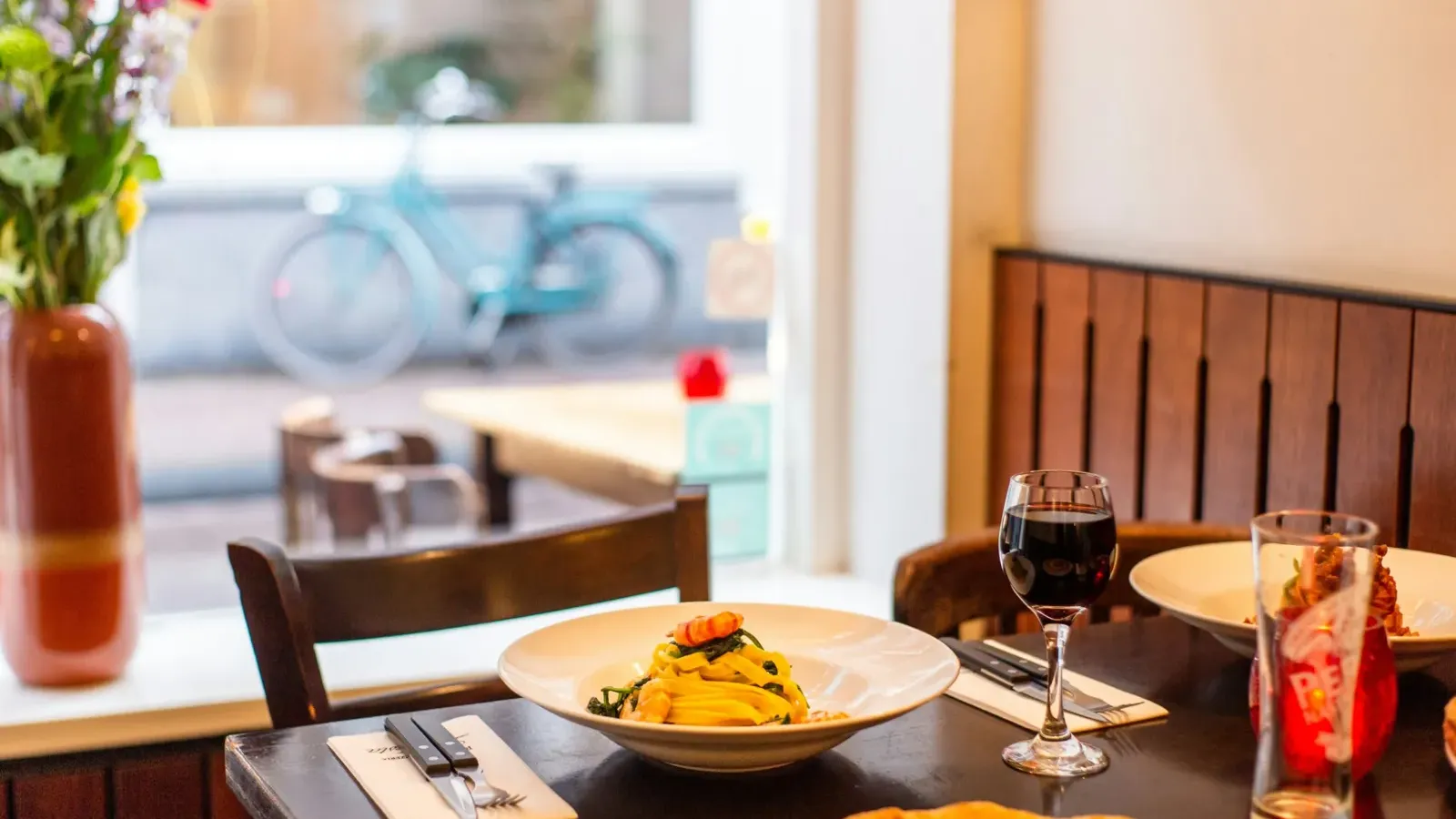
The short answer
Eat lunch around 13:00 and dinner from 20:00; restaurants that are full of people at 18:00 are usually for tourists. You don't have to order every course. Check the menu for the coperto (cover charge) and whether servizio is already included. Tipping is not expected: rounding up or leaving a couple of euros for good service is plenty. And remember the bill only comes when you ask for it.
Meal times
Breakfast is small and sweet: a cappuccino and a cornetto at the bar, standing up. Lunch runs from about 12:30 to 14:30, and many kitchens close in the afternoon. Dinner starts around 19:30 in the north and 20:30 or later in Rome and the south. Between the two there's the aperitivo (roughly 18:00–20:00): a spritz or a glass of wine with snacks. If you're hungry at 16:00, look for a bar, a bakery or pizza al taglio.
How to order
A traditional menu has antipasti (starters), primi (pasta, risotto, soup), secondi (meat or fish) with contorni (side dishes, ordered separately) and dolci. Nobody expects you to have them all: a primo and a contorno, or an antipasto to share and a secondo, is completely normal. In a pizzeria each person orders a whole pizza, eaten with knife and fork. The house wine (vino della casa) by the carafe is usually good and cheap. Water is bottled: naturale (still) or frizzante (sparkling); you can ask for tap water, but not everywhere will serve it.
Coperto, servizio and the bill
- Coperto is a fixed charge per person for bread and the table setting, typically €1–4 (more in very touristy spots). It's legal, but it must be written on the menu. Some cities and many places don't charge it at all.
- Servizio is a service charge, usually 10–15%, sometimes added in tourist areas. It must also be shown on the menu. If it's on the bill, you don't need to tip.
- The waiter won't bring the bill until you ask: catch their eye and say “il conto, per favore”. Lingering at the table is normal, not rude.
- Groups usually get one bill; splitting equally is called pagare alla romana. Cards are accepted almost everywhere, but carry some cash for small places.
- Always keep the receipt (scontrino): it's the legal proof of payment.
For what a full meal really costs, see how much a trip to Italy costs.
Tipping
Waiters in Italy are paid a salary, and tipping is not part of the culture the way it is in the US. Locals usually round up or leave nothing. If service was really good, leaving a few euros, or 5–10%, is appreciated, never expected. At the bar, leaving the coins from your change is a kind gesture. Taxi drivers: round up to the next euro.
Coffee at the bar
- A caffè is an espresso. Drink it at the counter: it costs much less standing than sitting at a table (table service can double the price).
- In many bars you pay first at the till, then hand the receipt to the barista.
- Cappuccino is a morning drink; ordering one after a big lunch or dinner is unusual (you won't be refused, but locals have a caffè).
- Want it cold in summer? Ask for a caffè shakerato. With a drop of milk: caffè macchiato.
Unwritten rules
- No parmesan on seafood pasta: many cooks will be offended.
- Pasta comes on its own plate, not as a side to meat.
- Wiping the sauce with bread (fare la scarpetta) is fine in a trattoria, less so at a formal dinner.
- Bread is for eating with the meal, not dipped in oil and balsamic before it.
- Book on Friday and Saturday evenings, and for Sunday lunch, the big family meal.
- Be wary of places with photo menus and staff calling you in from the street in the most touristy squares.
Useful words
| Italian | Meaning |
|---|---|
| Un tavolo per due, per favore | A table for two, please |
| Il conto, per favore | The bill, please |
| Acqua naturale / frizzante | Still / sparkling water |
| Mezzo litro di vino della casa | Half a litre of house wine |
| Sono allergico/a a… | I'm allergic to… |
| Senza glutine | Gluten free |
Find where to eat, when locals eat.
In 687 Italy each day is planned with real opening times, so lunch and dinner land when kitchens are open, with Nearby to find a place around you and the offline map. If plans change, NOW rebuilds the rest of the day.
Sources
- ENIT – Italian National Tourist Board
- Turismo Roma – official tourism site
- Feel Florence – official tourism site
Checked against these official sites in November 2026. Prices and rules can change: always confirm before you travel.